
AI & Design — Node-Based Workflows
Creator & Creative Director · Curriculum Architect · Pipeline Designer
Node-based AI workflows, directed at scale
I built a course that runs like an agency. I write the briefs, design the generative pipelines, set the quality bar, and direct two 12-designer sections every semester through full campaign builds — from node graph to production-ready assets. The work below was made by designers under my direction.
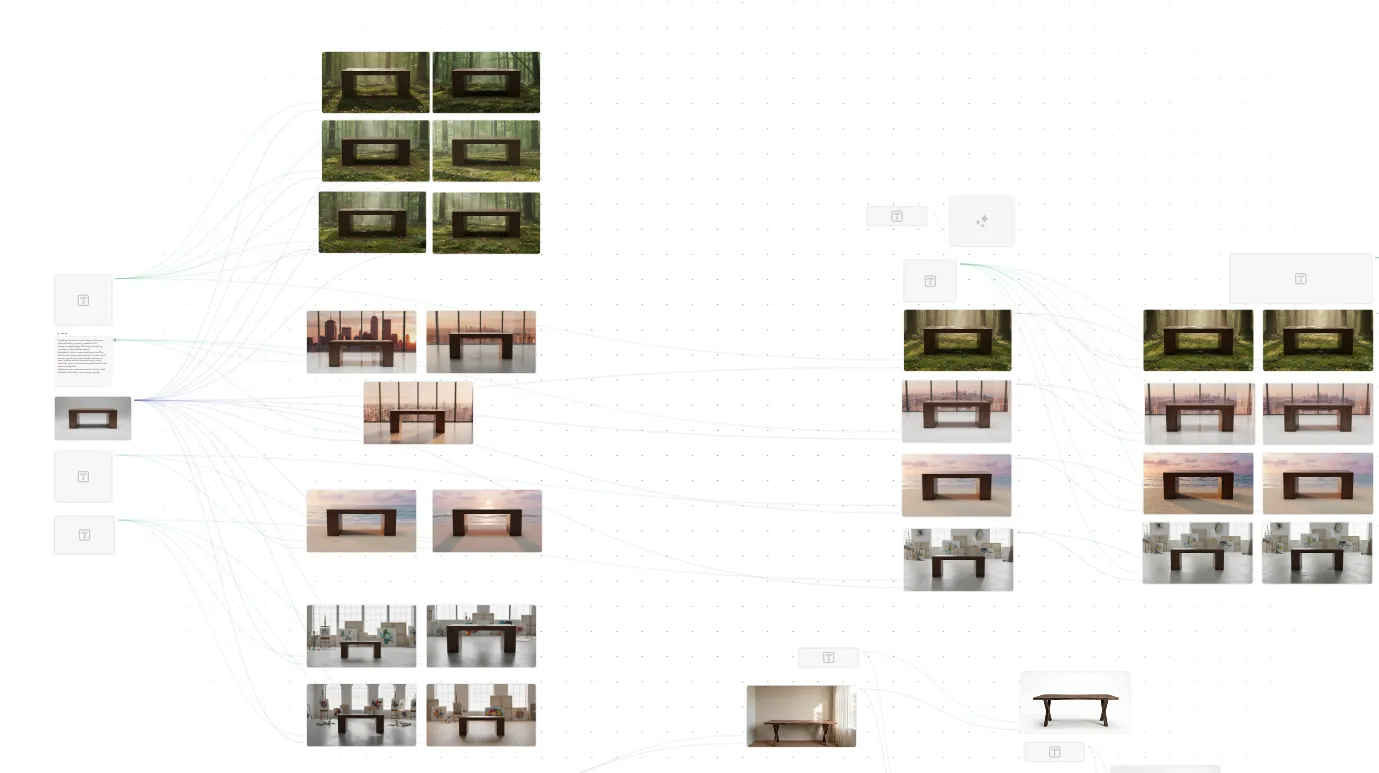
02 — The brief
Agencies don't have an AI tools problem — they have an AI process problem. Prompt-and-pray produces one-off images nobody can reproduce, brand-match, or defend to a client. So I built AI & Design around the thing agencies actually need: repeatable, reviewable, brand-consistent pipelines. Node-based workflows like Magnific Spaces (formerly Freepik), Figma Weave, and Higgsfield treat generation like production — inputs, transforms, and outputs you can inspect, rerun, and hand to a teammate.
The constraint I set for every project: if you can't document how it was made, it doesn't ship. Every campaign below comes with its node graph, its iteration history, and its usage rationale. That documentation standard is the ethics curriculum — provenance, disclosure, and craft accountability, the same questions an agency's clients and legal teams ask.
03 — My pipeline
Before anyone builds, I build.
The course sits on years of my own research into open-source and platform AI tooling. Here's one of my working pipelines, end to end — hand-made foundations in, production-ready campaign assets out. Every node inspectable, every output reproducible.
coral = made by hand purple = AI pipeline teal = accountability gray = inputs
1 — Nothing generates until these exist. Hand-made work is the pipeline's raw material.
2 — Style is encoded from the designer's own assets, never scraped references.
3 — The month of AI fundamentals lives here: structured prompt language, token-aware.
4 — Human craft re-enters before anything ships. AI never outputs final.
5 — Every input, seed, and version logged. A client or legal team can audit the run.
6 — One pipeline, full 360°: stills, video, voiceover, sound, mockups.
Pipeline schematic — Sprint, spec campaign
One brief in. A brand system out.
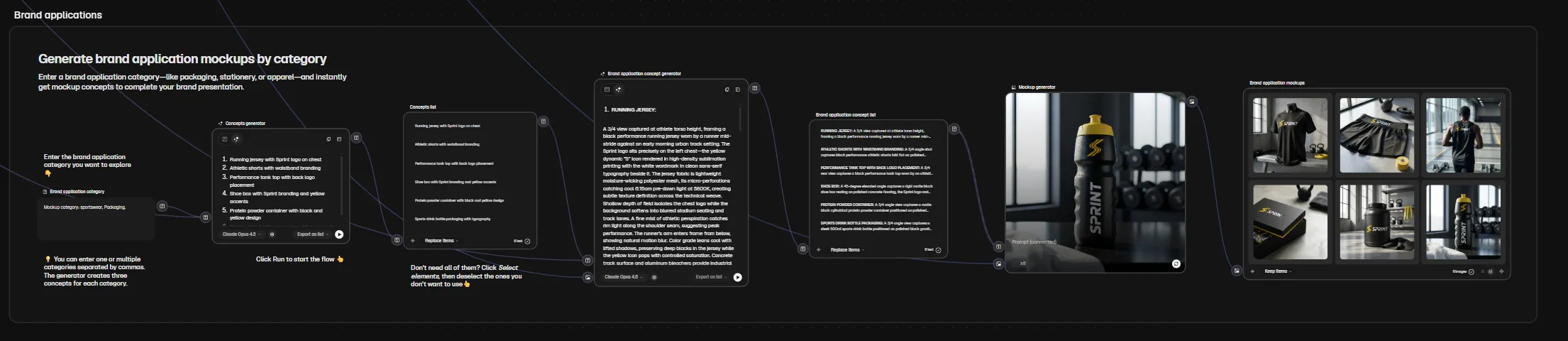
A studio proof of concept built around SPRINT — a spec brand created for pipeline development: an authored brand brief in, a full identity out — logo, type and color system, and application mockups, every step inspectable and rerunnable. The clean version of a canvas that, in practice, blooms to dozens of nodes.
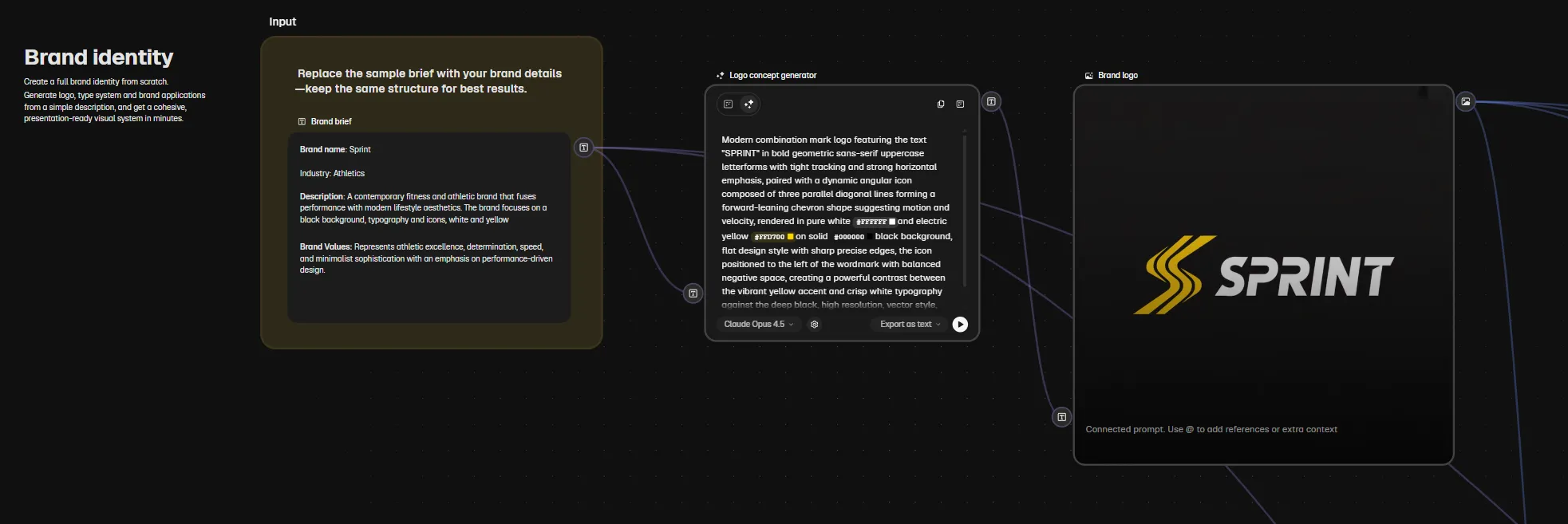
1 — The brief is authored, not generated: name, industry, values, voice. Hand-written constraints anchor every node downstream.
2 — An LLM node writes the logo prompt from the brief — prompt architecture as a reviewable artifact, not vibes.
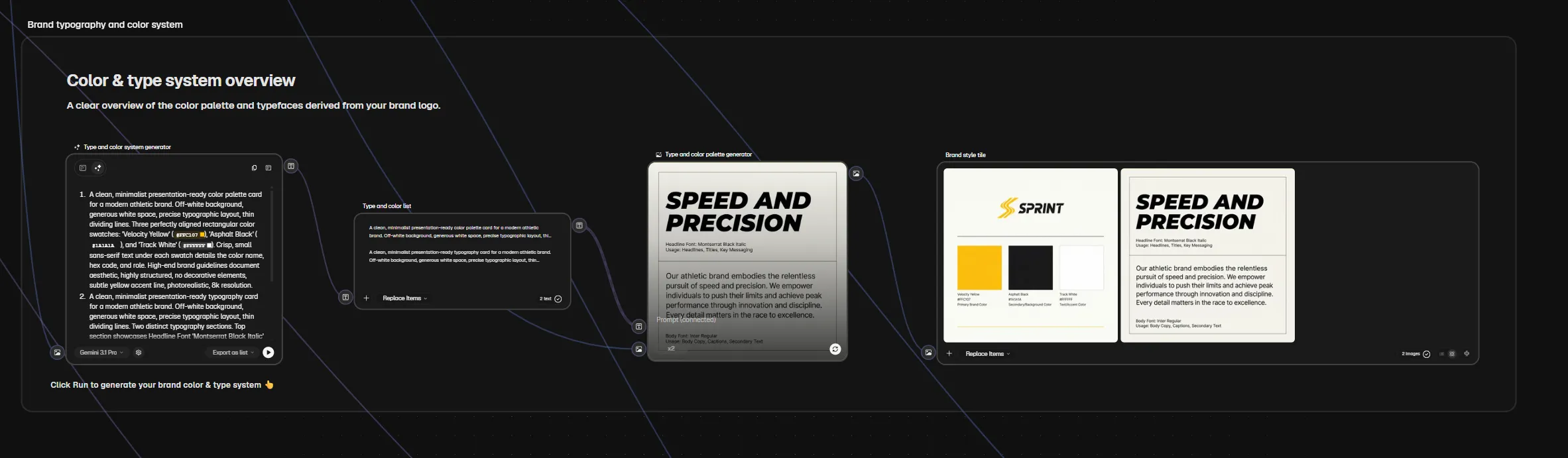
3 — The system derives from the generated mark: palette and typography stay coherent because they share one source.
4 — Application categories fan out — packaging, apparel, stationery — three directed concepts each.
5 — The mockup generator turns concepts into photographed-feeling scenes, brand-locked.
6 — One run accumulates a presentation-ready brand system: logo, style tiles, mockups.
coral = authored by hand purple = AI pipeline teal = output
Reveal layer 2 — the real canvas
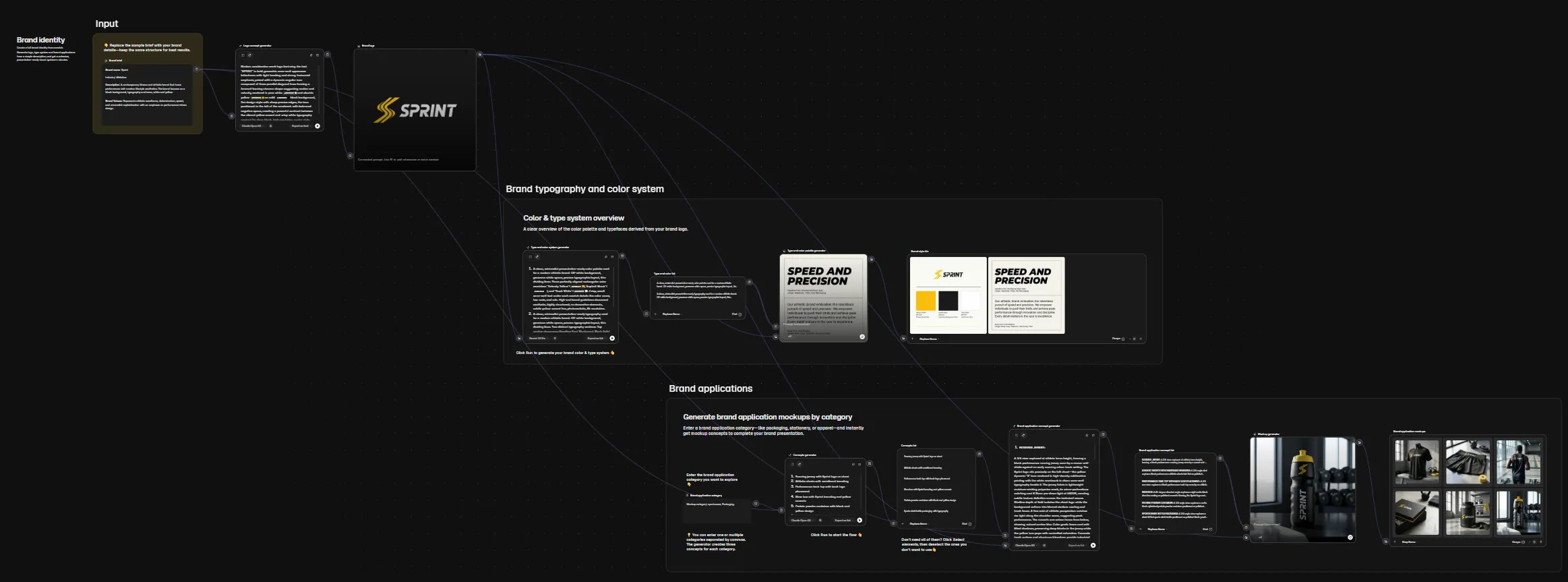
Same pipeline, no simplification. This is the part that proves intimacy, not familiarity.
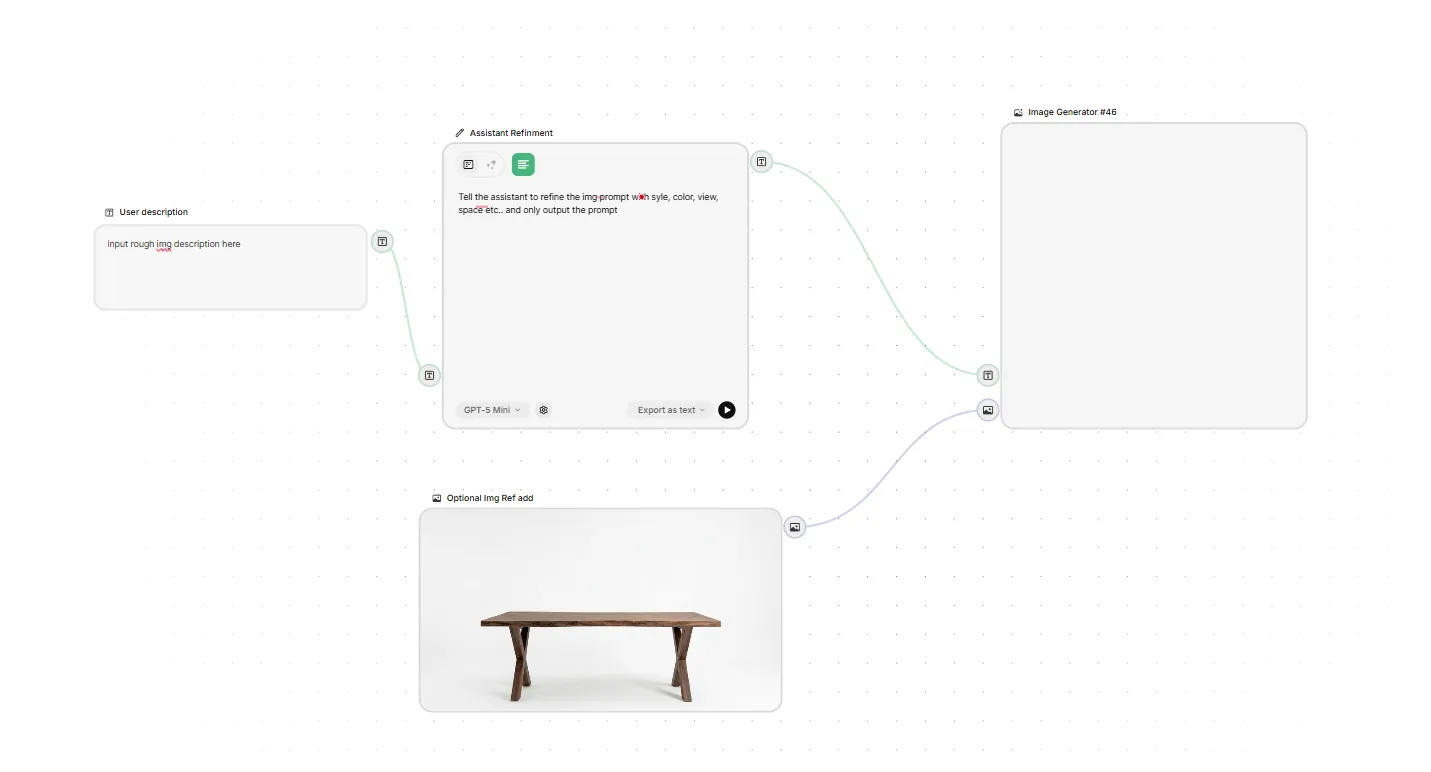
Prompt refinement chain
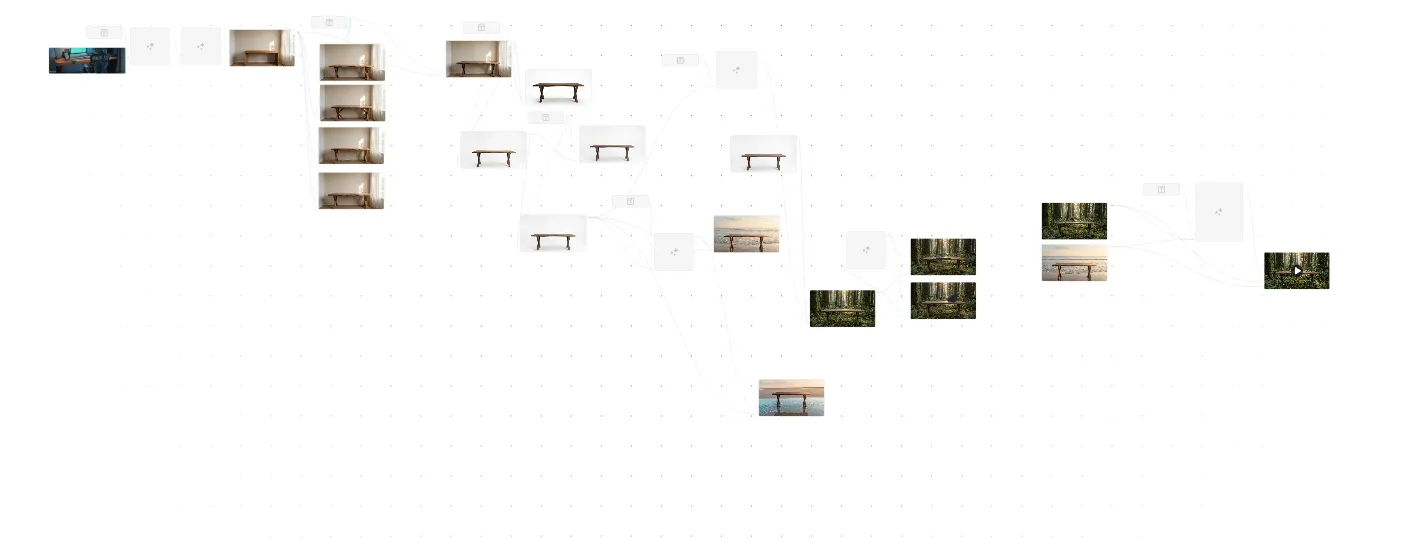
Directed iteration at volume
“The node graph is the new creative brief: it's how you make AI output someone else can pick up, rerun, and trust.”
04 — Directed work — full campaign case studies
The course runs like an account cycle. The first month is foundations — what these models actually are, how tokens work, how a prompt gets parsed, and the language that gets professional results, because you can't direct a tool you don't understand. The rest of the semester is one build: each designer produces a full 360° campaign with a documented case study — work that would traditionally take a small creative team. And it's not just image generation: campaigns span AI-assisted images, video, voiceover, sound design, and product mockups — all rooted in design assets the designer makes by hand first: logos, package design, merch, storyboards. I direct those builds the way an ACD directs a book: brief, reviews, kill-your-darlings edits, and a documentation requirement on every asset. Selected campaigns below, shown with their node graphs, exactly as they were built.
Rollo Eyes — coffee brand
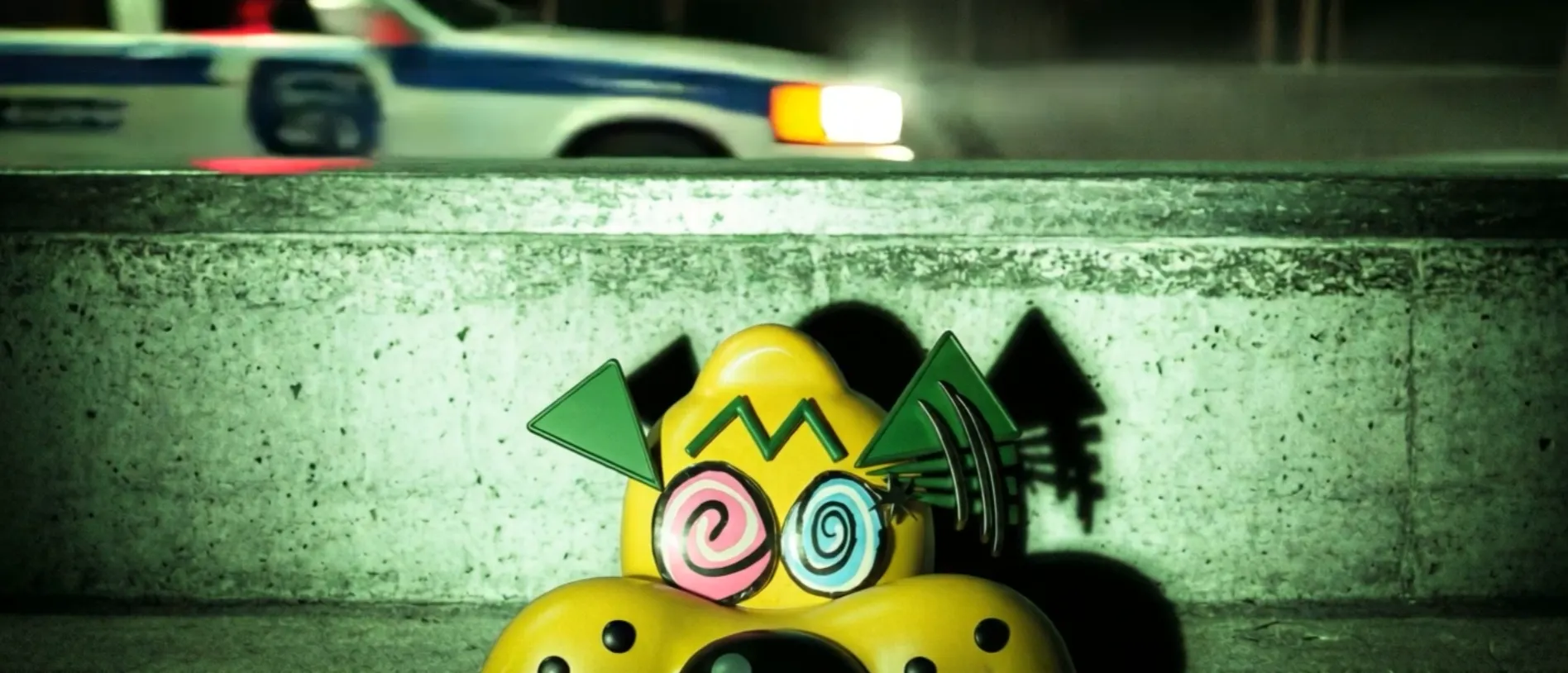
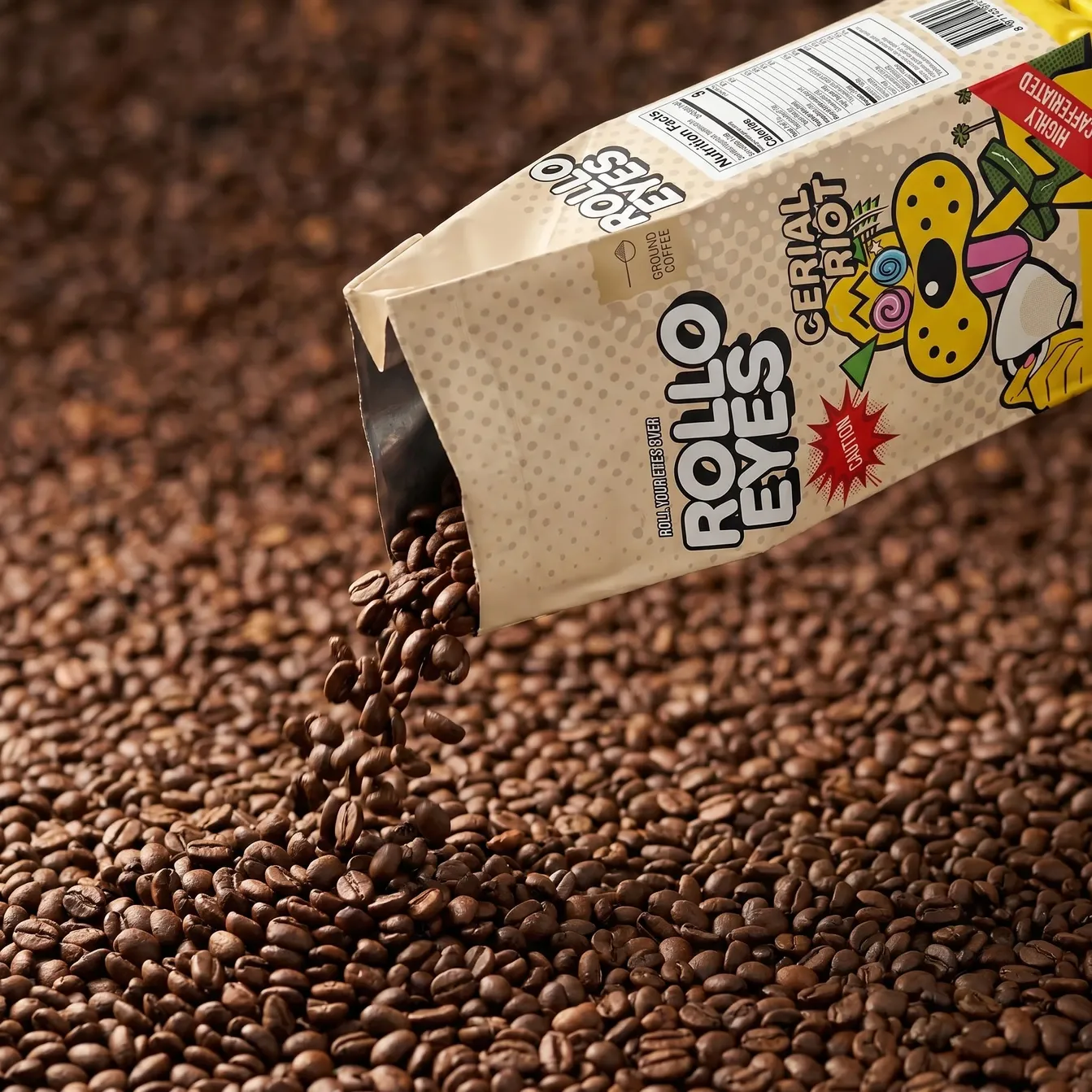
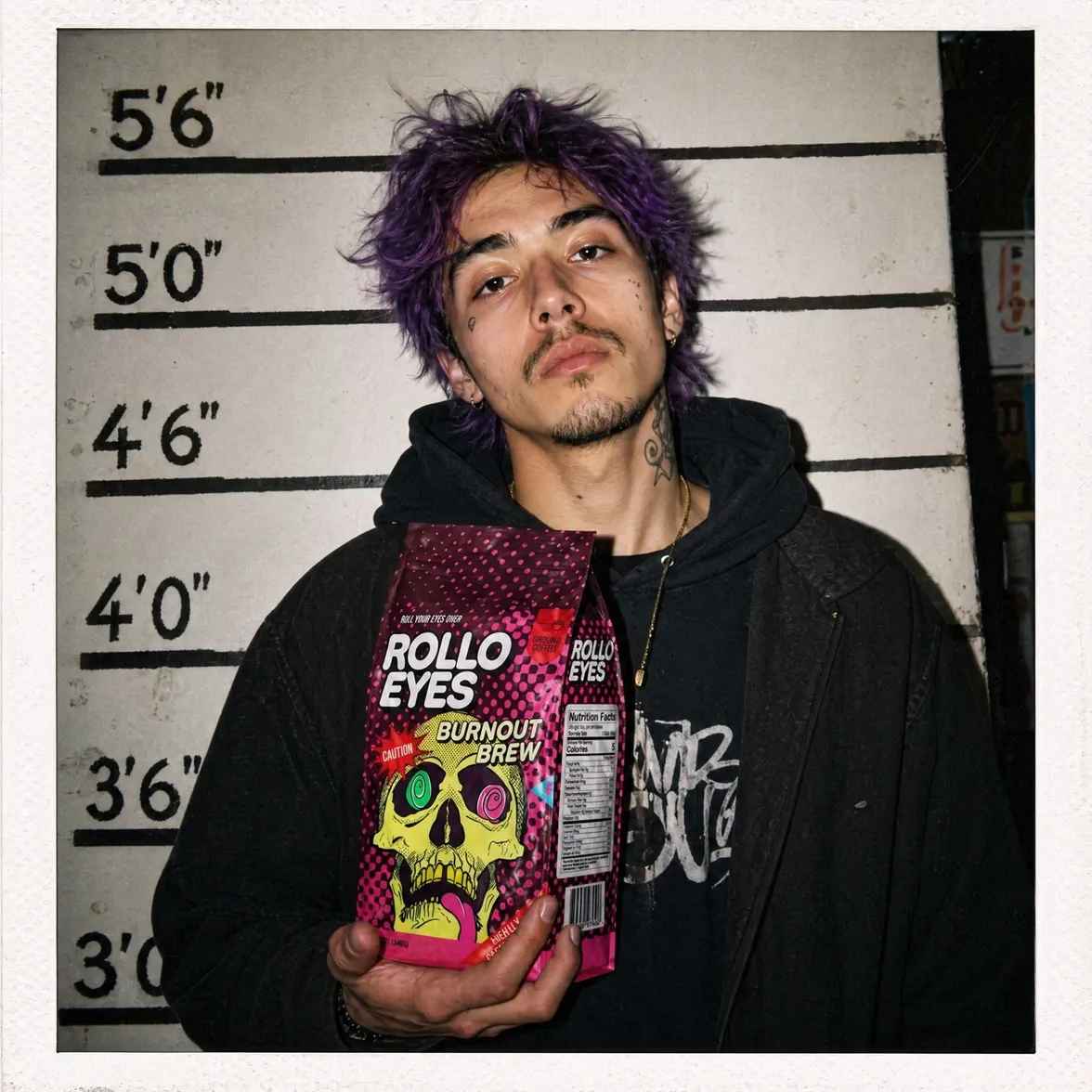
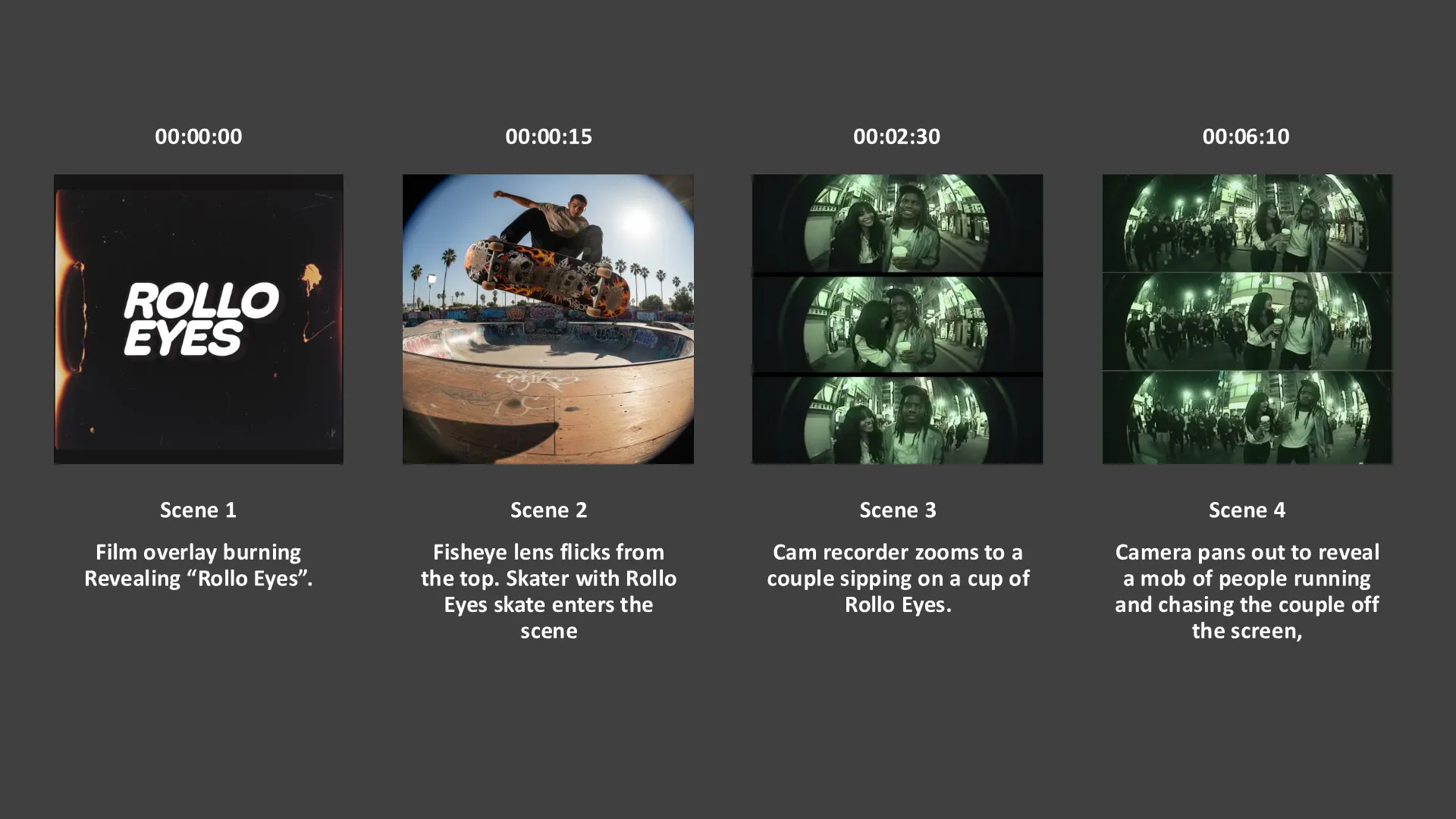
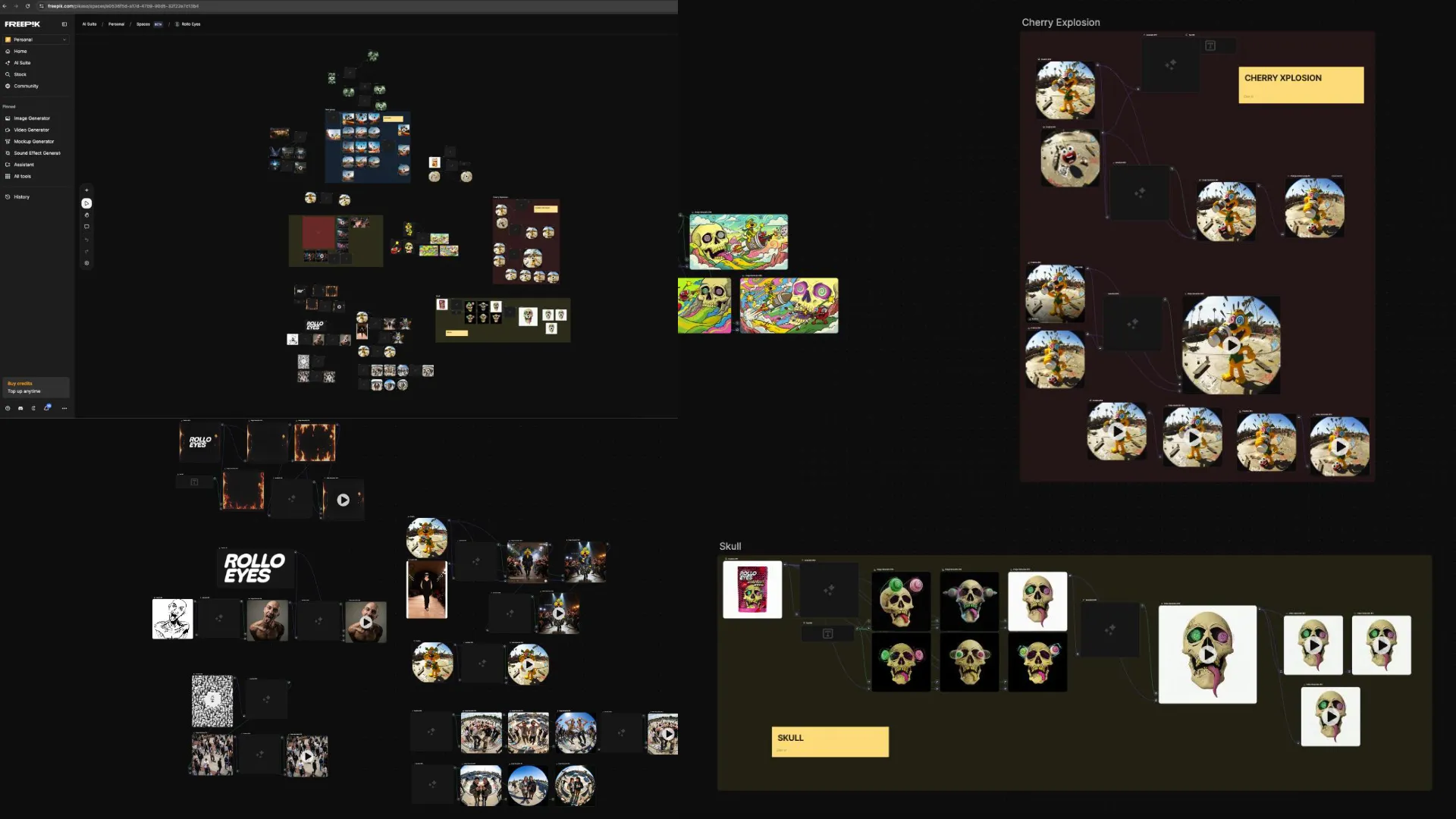
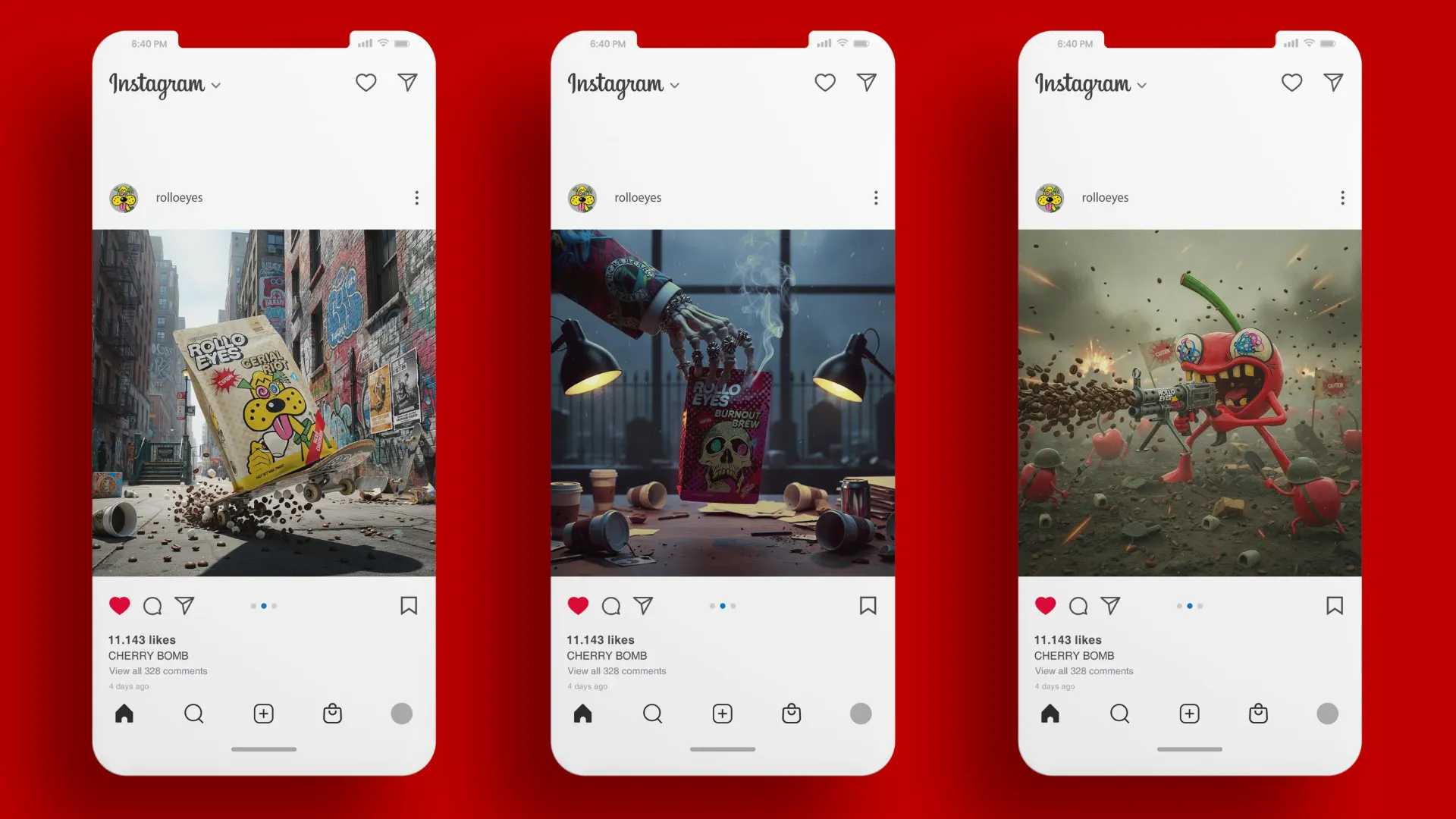
Brand archetype through packaging, illustration, motion storyboards, and a video spot taken through four documented revision rounds — with the full Spaces workflow on the record. View the full campaign deck (PDF).
Campaign by Daniel Huaracallo, AI & Design, Kean University — directed by Sahil Patel. Spec work created for educational purposes; brands shown are not clients.
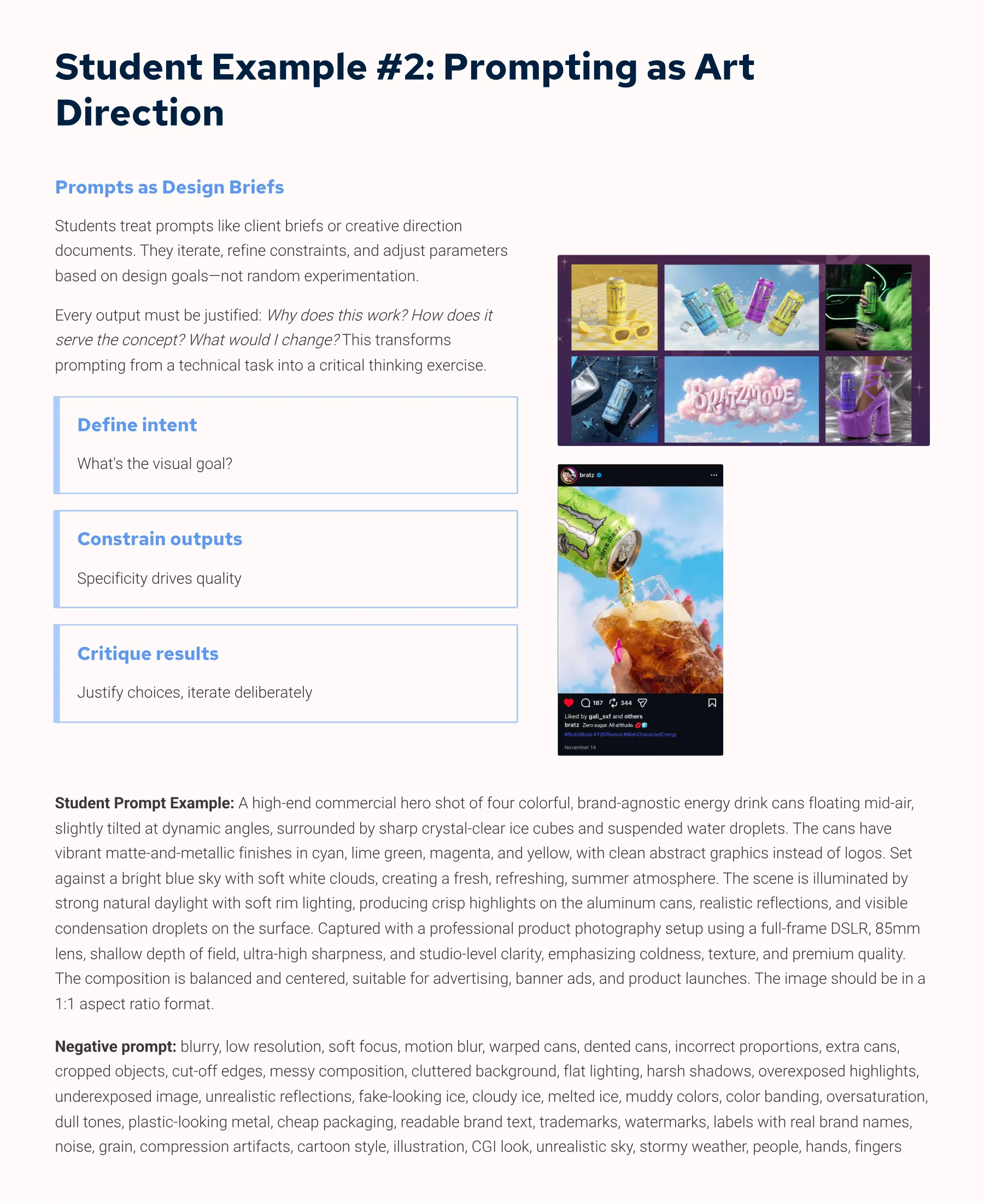
Bratzmode — Monster Energy × Bratz
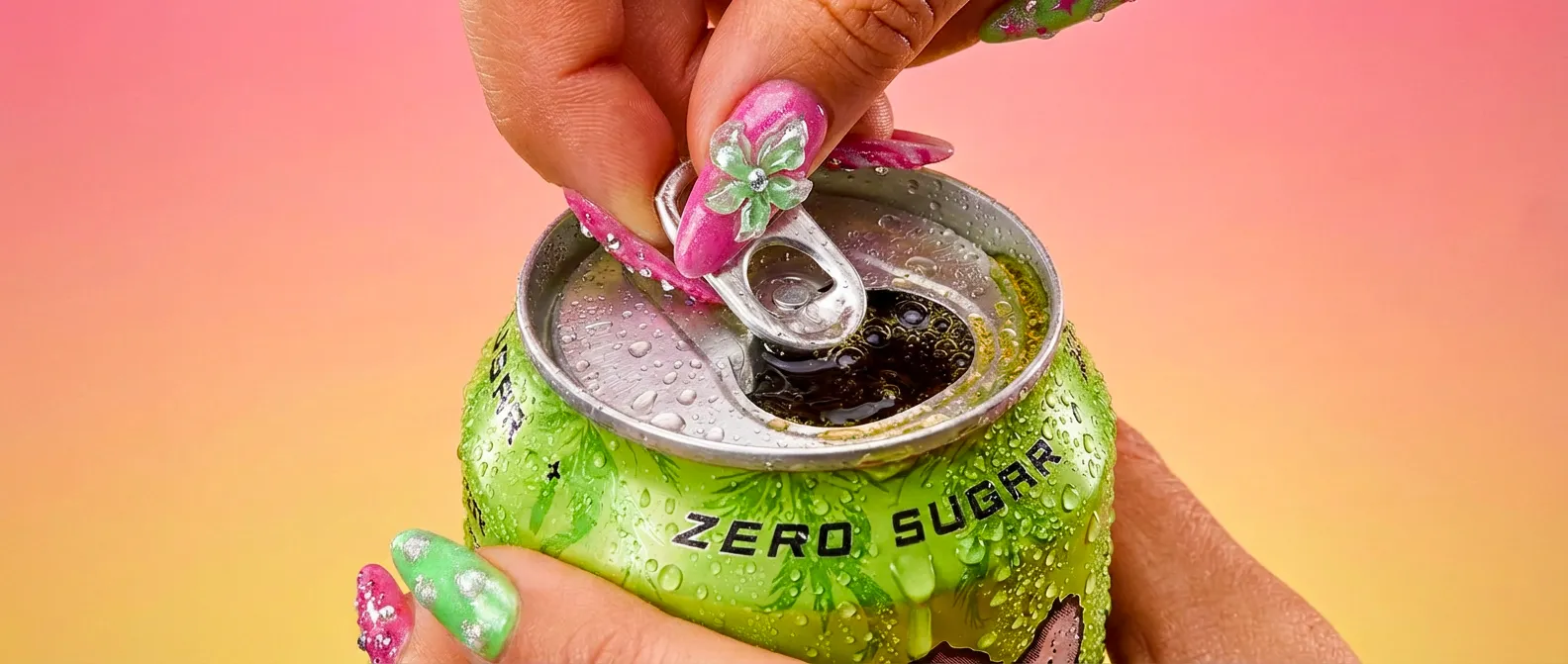
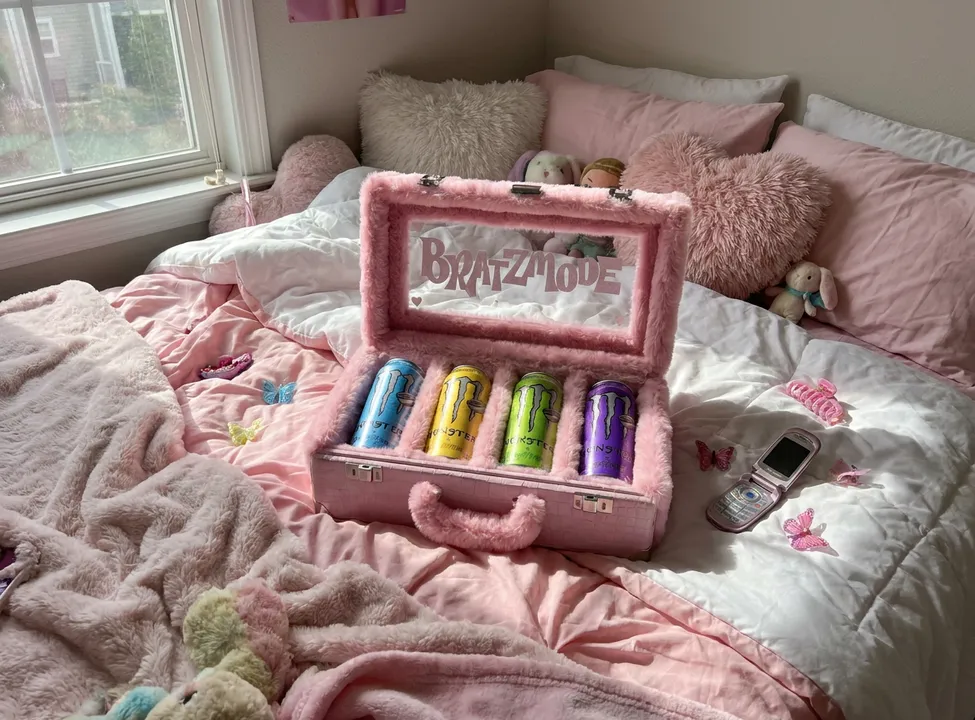
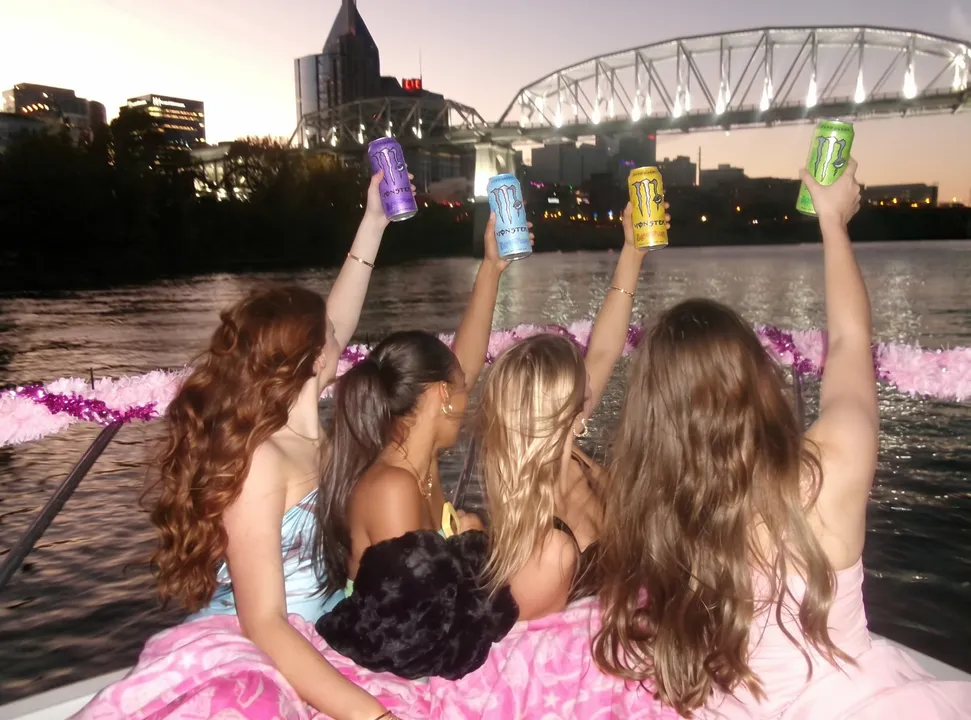
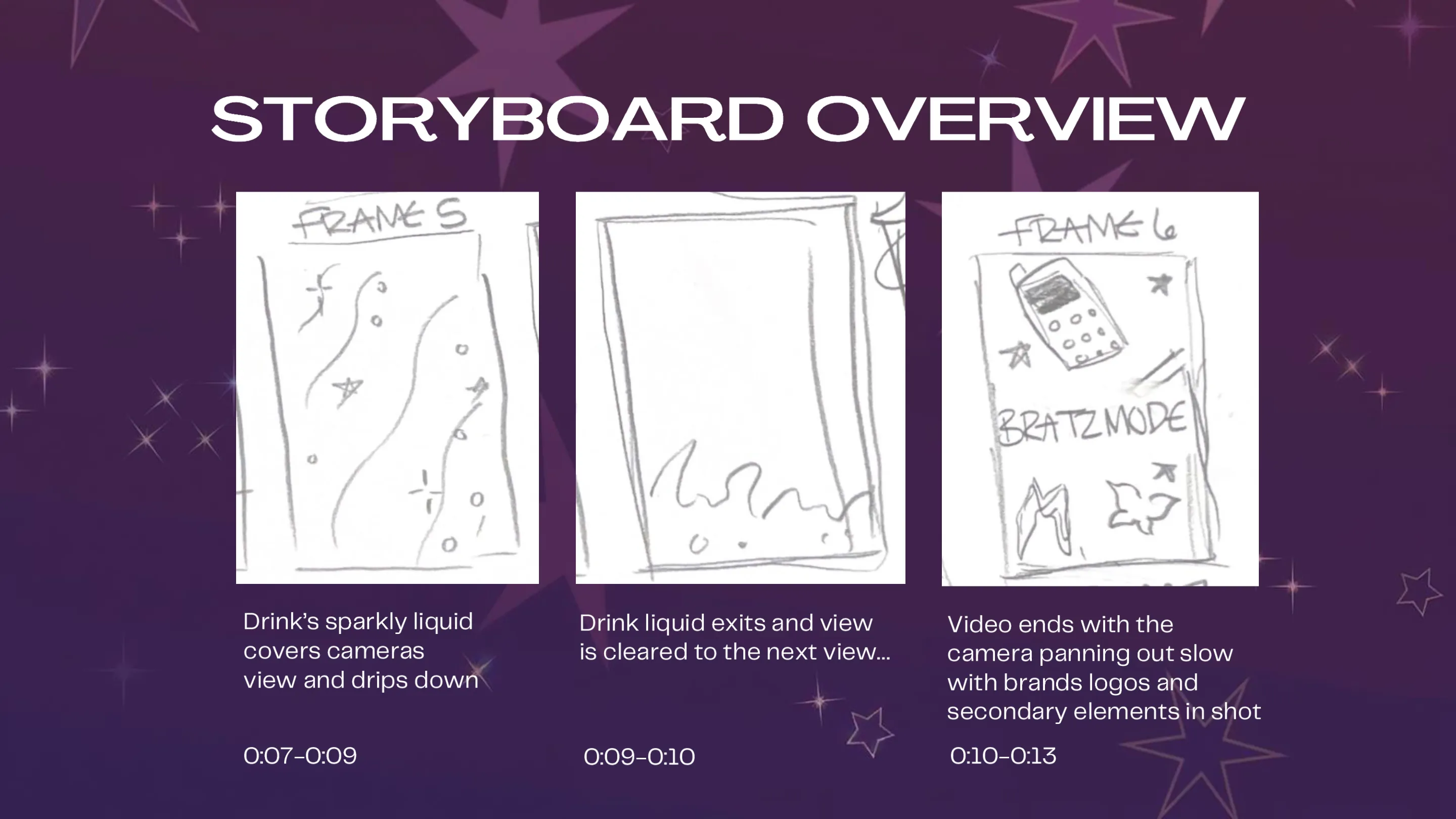
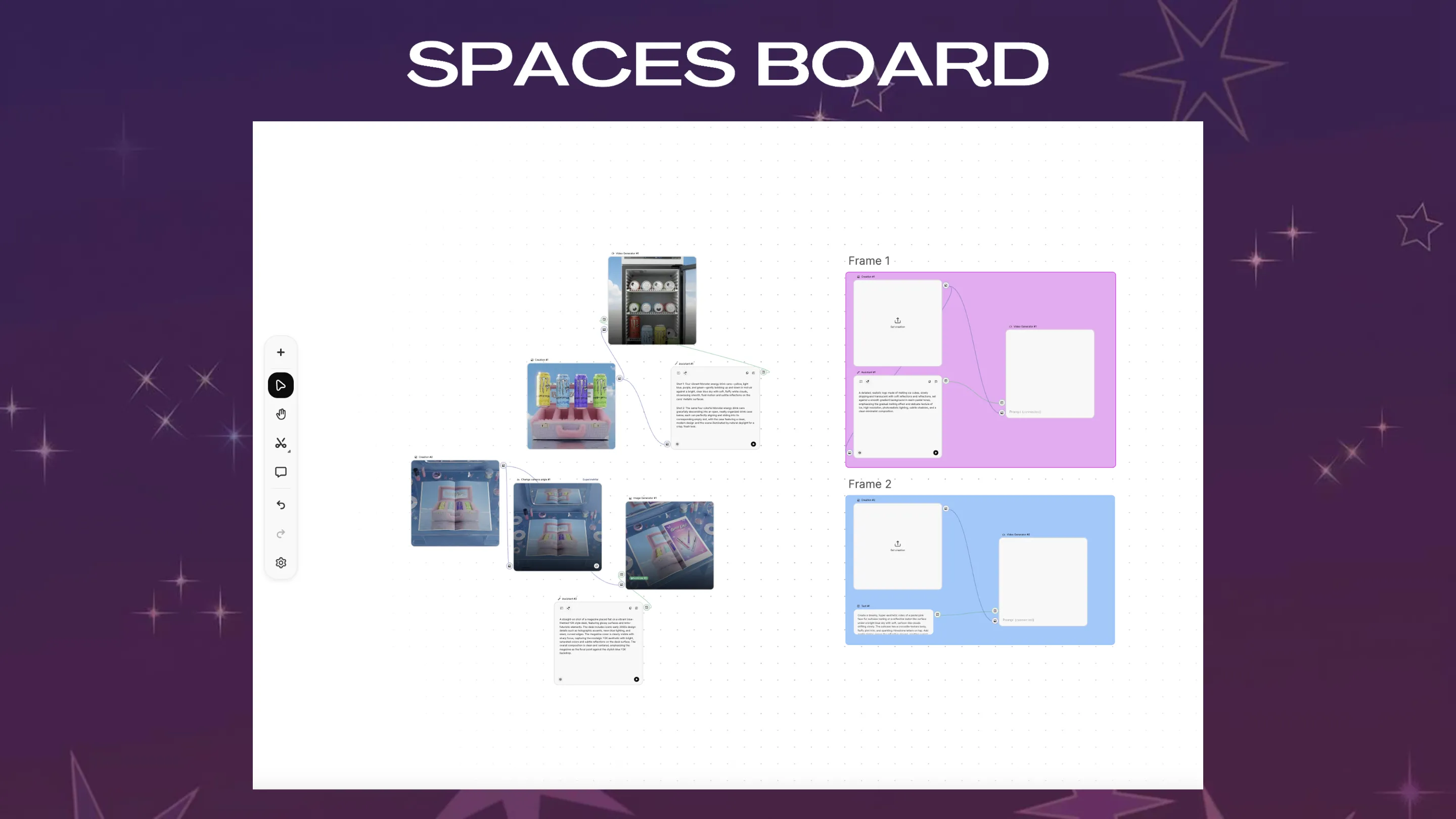
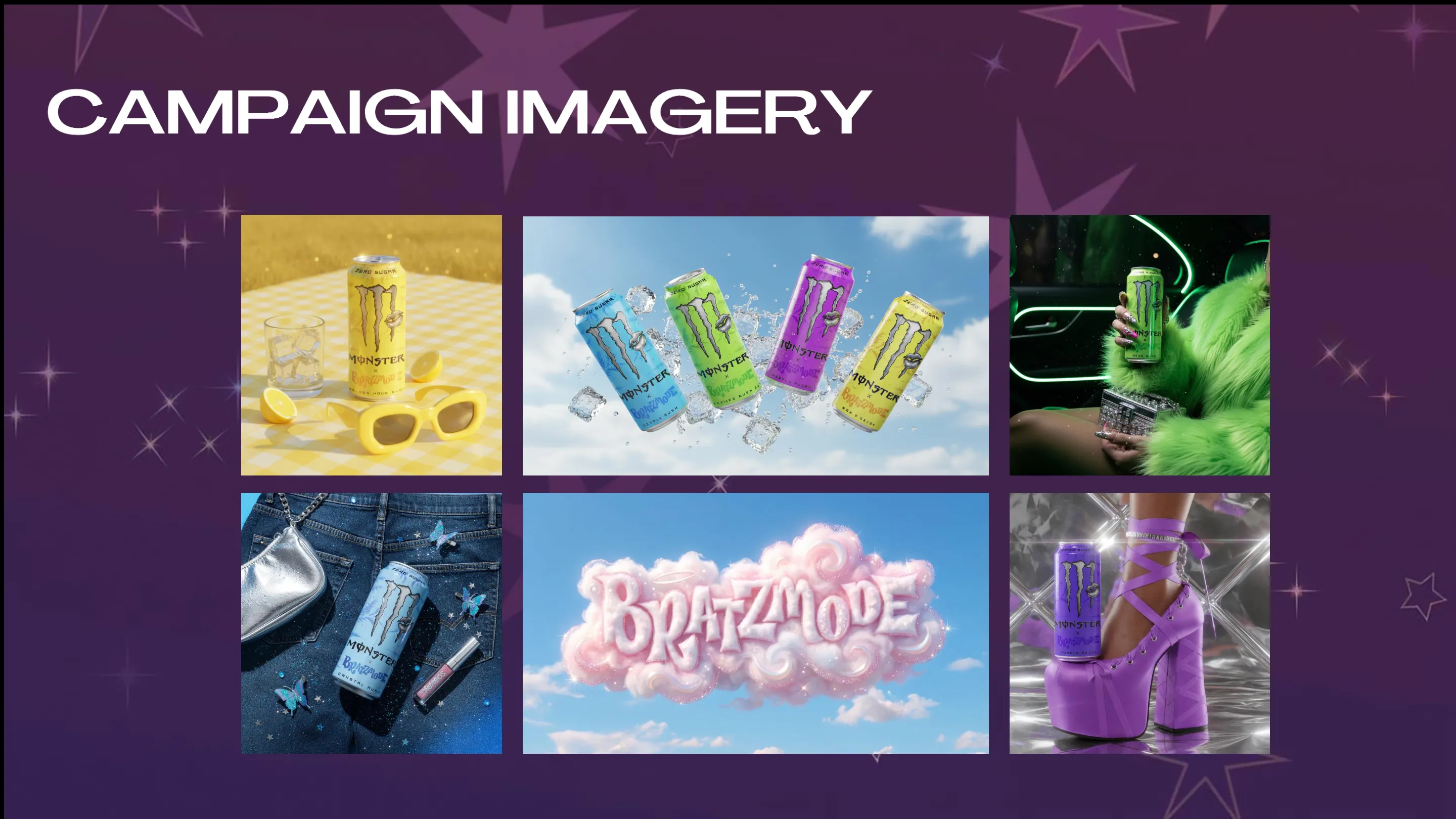
A full 360° build: flavor-based color system, typography, store concept, static social layouts, motion direction, hand-drawn storyboards — then the documented generative pipeline that produced the campaign stills. View the full campaign deck (PDF).
Campaign by Anne Gede, AI & Design, Kean University — directed by Sahil Patel. Spec work created for educational purposes; brands shown are not clients.
05 — The ethics layer
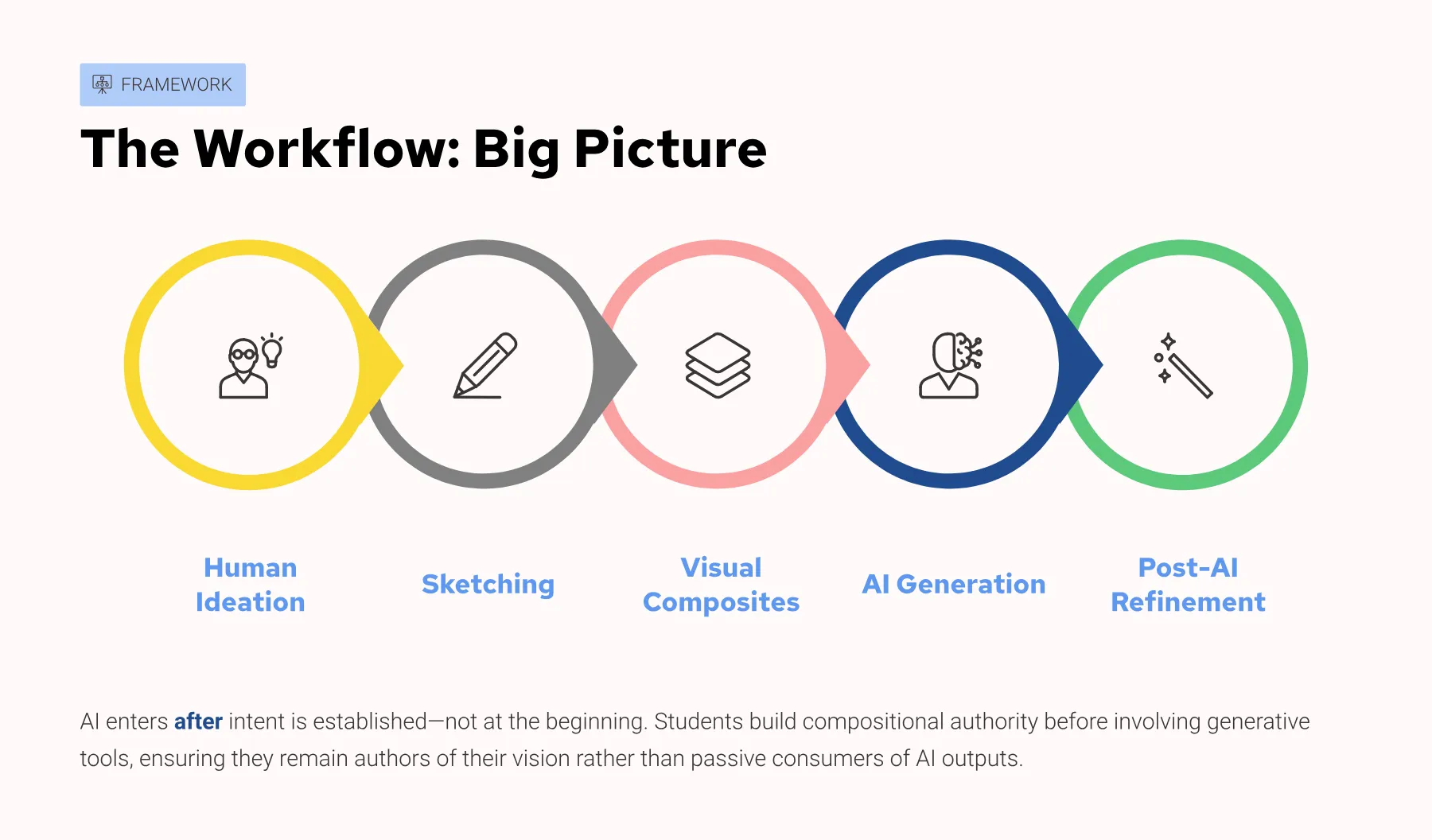
My take on ethical AI is simple and unforgiving: design first. Do the sketches. Do the hundred iterations. Do the research, the roughs, the finals — by hand. Only then does AI enter the pipeline, because then every output — image, video, voiceover, mockup — is rooted in your own work. In my course nothing generative happens until the designer has hand-built the campaign's foundations: logo, packaging, merch, storyboards. AI extends that foundation; it never replaces it.
“It isn't prompt-and-pray. It's be a designer first — then use AI as your tool.”
Beyond the philosophy, it's a workflow requirement. Every project must carry: full pipeline documentation (what tools, what inputs, what was generated vs. authored by hand), disclosure-ready provenance (a client or legal team could audit it), and a defense of usage (why AI here, and what human craft came first). This is agency-centric ethics — built for MLR reviews, brand-safety teams, and clients who ask “where did this image come from?” I've shipped work through four-level pharma regulatory review; I teach AI the way that world requires.
I presented this framework as a speaker at the Kean University AI Symposium, 2026: “Ethical AI Workflows for Contemporary Design Education.”
06 — Proof & press
“This course ensures our students are not only fluent in emerging technologies but ready to help shape the future of creative industries.”
“What we're creating is high-level… employers are going to be impressed with the speed we can design.”
Speaker, 2nd Annual Kean University AI Symposium (2026). Additional courses across the program now integrate AI coursework built on this model.
07 — Outcome
The course runs at capacity — two sections every semester, inside Kean's NASAD-accredited BFA program — and is covered by the university as a signature innovation. Designers leave with documented, reproducible AI production skills — and portfolios that show process, not just prompts. The pipeline standard I built for the classroom is the one I bring to production work: node-based, brand-consistent, documented, and defensible.